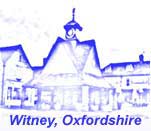

Witney HistoryThe market town of Witney is the largest town in West Oxfordshire and is situated where the A40 trunk road crosses the River Windrush. Witney was first recorded in AD 969, though there is evidence of both Iron Age and Roman settlements in the area. In 1044 Queen Emma granted the Bishops of Winchester an estate in Witney and the ownership of the estate is confirmed in the Doomesday Book. A palace was built next to the parish church, the foundations of which were excavated in 1984. One of the streets in Witney, Queen Emmas Dyke, probably relates in some way to this granting of the estate by Queen Emma. In the Doomesday survey, Witney is recorded as having two mills, both for grinding corn, but by 1277 at least one cloth or fulling mill was established in the area. By the end of the Middle Ages Witney was a lively market town with a developing industry making blankets and gloves and by 1800 there were five working mills in and around Witney. So for centuries Witney has been associated with blankets. And although the last blanket mill closed in 2002, the association will live in the minds of locals and visitors alike for many years. One of the most famous blanket makers in the town, if not the biggest, was Early's who were in business for more than 300 years. In 1669, the Early family business was founded and in 1861 Charles Early opened a railway line from Yarnton to Witney which, in time, became part of the Great Western Railway. It was closed to passengers in 1962 and to freight in 1970. In 1711 the Weavers formed a Guild and were granted a Charter by Queen Anne. They then built the blanket hall in the High Street. All blankets made in Witney had to be taken there to be measured and weighed, thus ensuring the very high quality of the blankets to be maintained. The name Early's still survives in the form of the Early's of Witney factory shop in Wesley Walk. The Cogges Manor Farm museum is home to displays reminding us that the Witney blanket market was once a global concern with blankets being exported to American Indians in exchange for furs. Witney grew on the banks of the river Windrush, which helped the brewing industry, and its importance as a strategic location for travellers is reflected in the number of old inns that exist. The Angel is a perfect example. Looking out onto the Church Green, in the 17th Century it was known as The Greyhound. When The Angel was sold in the mid 1800's, both the seller and buyer were members of the Early family. Another example of how blankets, and the blanket making families are such an integral part of the history of Witney. One of the most famous sights in Witney is The Buttercross. In 1962 The Buttercross received a £1400 facelift, 100 years after the previous major work on the building. The Stonesfied slates were removed, exposing all the timbers in the structure. They were cleaned and all the rotten wood was removed. Finally the timbers were sprayed with a wood preservative. The Visitor Information Centre moved from 26 Market Square, Witney in 2007 and can now be found at Town Centre Shop, 3 Welch Way, Witney OX28 6JH. Telephone 01993 775802 |
|
Information stored on this site, or collected by it may be subject to Data Protection Regulations. The nature and content of information stored about a company or individual will be disclosed on request of the individual or company concerned.