Witney Lake and Meadow
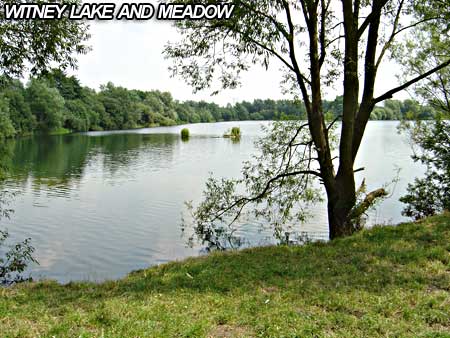
Witney Lake (known locally by some as Duck Lake or
Ducklington Lake) is a flooded gravel pit which has been purchased by Witney Town Council as part of the
Witney Lake and Meadows
project. The 30-hectare area includes wet meadow and grazing land adjoining the two legs of the River
Windrush to the south and north of the A40 road. The southern end of the lake is
managed as a nature reserve and the grazing land to the east and north is classified as an Environmentally
Sensitive Area. Ducklington village lies to the west and between the lake and
there are small paddocks and allotments. The paddocks are grazed and are bordered by some mature Oaks and
pollarded Willows although there are signs of encroaching development at both
the north and south of the village. The lake is very deep throughout and so lacks any shallows or muddy
edges.
The site is situated within a mile of the bustling Witney
town centre, and is well used by the general public but it never feels overcrowded. The northern end of the
lake and the river
are also fished although the close season is still adhered to. The lake itself is surrounded by a very good
path (this has been improved over the years as it could get rather muddy
underfoot during prolonged wet periods in winter).
Witney Lake has been named one of the most important sites
for plants and wildlife in the Windrush Valley area. A recent study by the Lower Windrush Valley Project and
Pond Conservarion
found 110 bird species and a large variety of invertebrates and wetland plants.
The Birds Of Witney Lake
The area is home to a number of birds so look out for the
following:
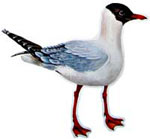
Black-Headed Gull
 |
|
Black-Headed Gull
In winter these gulls lose the dark head marking,
which shrinks to a small spot behind the eye.
|
|
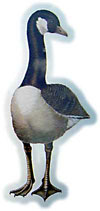
Canada Goose
|
|
Canada Goose
A large bird with a long black neck, the Canada Goose
has a distinctive trumpet-like calling
|
|
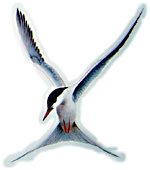
Common Tern
 |
|
Common Tern
Common Terns are more slender and agile than gulls
They patrol up and down the lake in summer.
As soon as one spots a fish it plummets into the
water
|
|
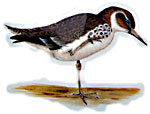
Common Sandpiper
 |
|
Common Sandpiper
As it walks or runs the tail bobs. The long bill is
used for probing in the mud for food
|
|
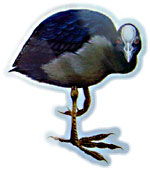
Coot
 |
|
Coot
Avid nestbuilders, Coots heap waterweed into large
piles
|
|
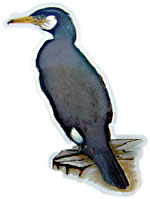
Cormorant
 |
|
Cormorant
The webbed feet help the Cormorant to swim and catch
fish under water
|
|
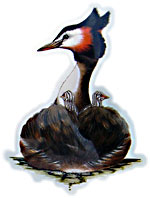
Great-Crested Grebe
 |
|
Great-Crested Grebe
The Great-crested Grebe is an elegant waterbird. Its
body sits low in the water
|
|
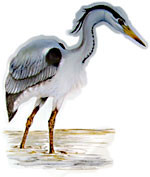
Heron
 |
|
Heron
The Heron is a patient angler, standing stock-still
in the shallows watching for fish
|
|
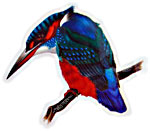
Kingfisher
 |
|
Kingfisher
A flash of blue is often all you will glimpse of a
kingfisher
You might be lucky enough to see one perching over
the water watching for fish
|
|
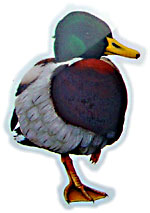
Mallard
 |
|
Mallard
Mallards are our most familiar duck. Males are
handsomely coloured, while females are brown and drab
|
|
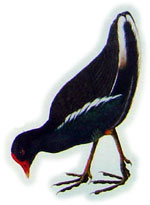
Moorhen
 |
|
Moorhen
Moorhens have large feet that help them walk on
floating waterweed
|
|
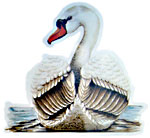
Mute Swan
 |
|
Mute Swan
A most graceful bird.
The males are called "cobs" and have larger
black knobs on their beak that the females which are called pens. The cygnets are grey.
|
|
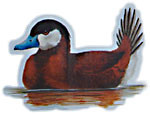
Ruddy Duck
 |
|
Ruddy Duck
A rare visitor to the lake. The male has a blue bill,
white face and dark cap.
The female is much darker.
|
|